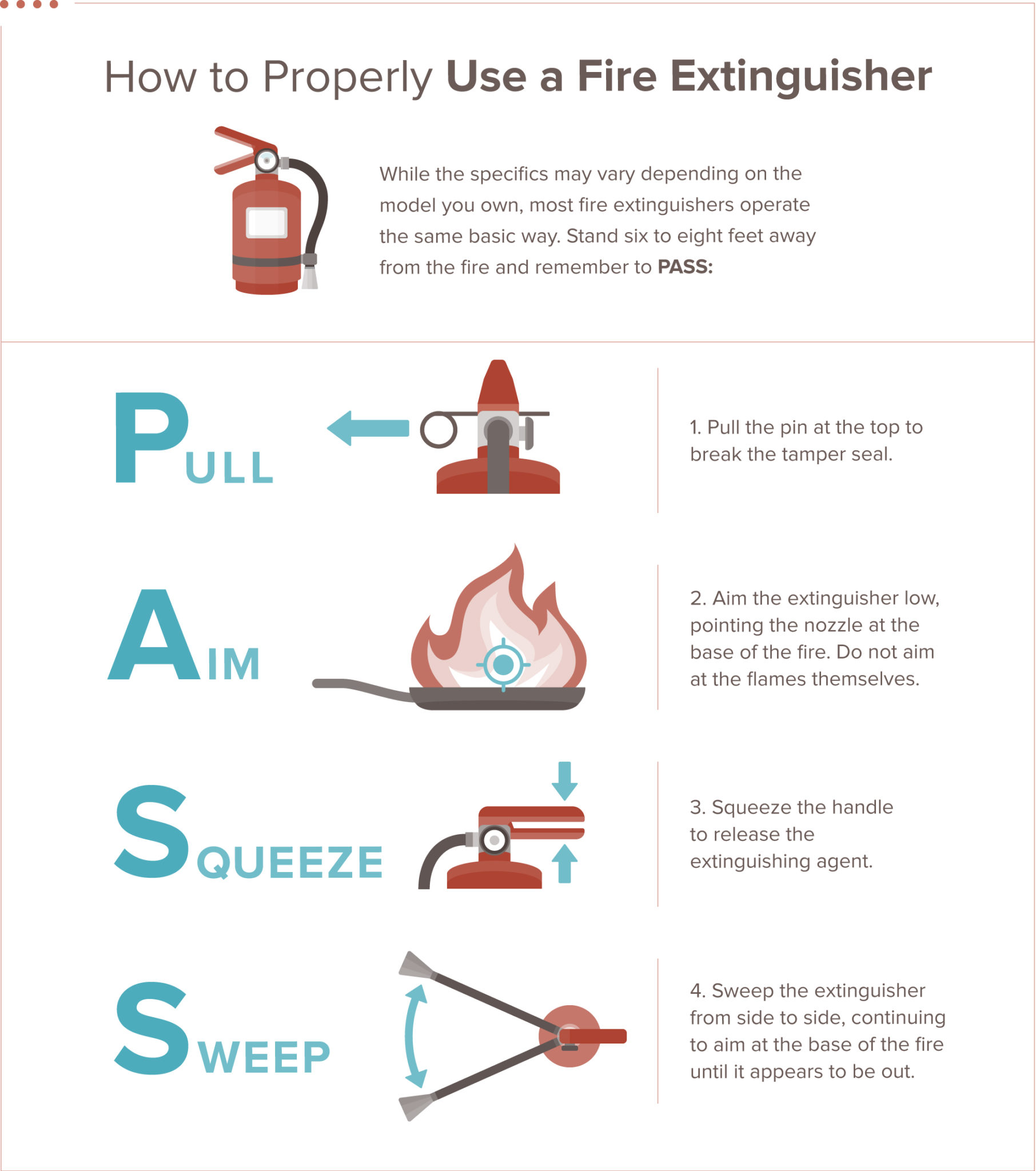
We should all have at least one fire extinguisher somewhere in our home, but it’s not enough to simply keep one under the kitchen sink. If there is a fire, your safety—and the safety of your home—depends on knowing how to properly use that fire extinguisher.
In case your fire extinguisher has been sitting around collecting dust, here’s everything you need to know before brushing it off and fighting a fire in your home the right way.
Choose the Right Fire Extinguisher
The first thing you need to know is the different classifications of fires, and the second that not all fire, you need to understand what types of fires you may have to deal with and make sure your extinguisher can get the job done.
Most household fires fall into one of the following categories:
Class A: These fires are fueled by solid combustibles like wood, paper, and cloth.
Class B: These fires are fueled by flammable liquids such as oil, petroleum, and gasoline.
Class C: These fires are started or fueled by faulty wiring, fuse boxes, and appliances.
Class K: These fires are started or fueled by cooking oils and greases, animal fats, and vegetable fats.
All fire extinguishers are labeled to indicate which classes of fire they are designed to combat. Most household fire extinguishers are considered multipurpose and labeled for use in A, B, and C classes. Fire extinguishers safe for Class K fires are heavier duty and will need to be bought separately. We suggest this 6-liter extinguisher, as it best fits the Fire Department Connection’s recommendation.
Fire extinguisher labels also include symbols to indicate which types of fires the extinguisher is designed to fight. If there is a circle and a red slash through any of the symbols, that indicates that the extinguisher cannot be used to fight that type of fire.
Household fire extinguishers are also rated for the size of fire that they can safely handle. The higher the rating, the larger the fire the extinguisher can put out. Class A fires are rated 1 to 40, and Class B fires are rated from 1 to 640. There is no size rating for Class C fires. Note that higher-rated extinguishers are often heavier, so be sure that you can comfortably handle the size of the fire extinguisher you keep at home.