How To Use A Fire Extinguisher
Every day we walk past fire extinguishers in our workplaces, public areas and possibly in our homes. But can you say that know how to use a fire extinguisher?
We are going to explain how to use a fire extinguisher correctly and ensure you are ready in case of an emergency.
Before Using A Fire Extinguisher
Only use a fire extinguisher when:
- It’s safe to do so acknowledging the size and location of the fire.
- You’re positive you know how to use the fire extinguisher correctly.
- Everyone has left the area and accounted for at your evacuation area.
- The fire department has been called.
- You can safely enter and escape from the fire.
Remember, life is more important than property. Don’t put yourself or others at risk.
How To Use A Fire Extinguisher, PTASS Technique
The PTASS Fire Extinguisher technique should be common knowledge to EVERYONE!
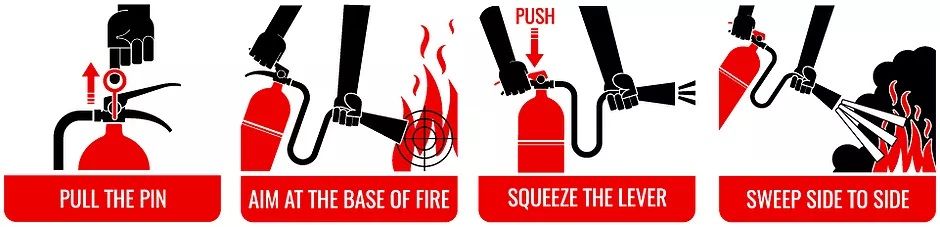
PTASS is the acronym used to describe the four necessary steps of operating a fire extinguisher.
Pull
The very first step is to pull the safety pin at the top of the fire extinguisher. This pin is in place to stop the handle from being accidentally squeezed.
Test
Give a quick test squirt to make sure the extinguisher is working.
Aim
Standing at a safe distance from the fire, aim the extinguisher nozzle toward the base of the fire.
Squeeze
Squeeze the handle to discharge the extinguishing agent. Always make sure you are at a safe distance from where the fire was before releasing the handle as the fire could flare up again.
Sweep
Sweep the hose and nozzle of the fire extinguisher from side to side, directing your aim at the base of the fire.
Knowing How To Use A Fire Extinguisher
A fire always starts small. It can cause extensive damage to property and threaten lives if not handled appropriately within the first few minutes of combustion.
If you have a maintained fire extinguisher and you also know how to use it, possible accidents can be limited.
Understanding The Different Types Of Fire Extinguishers
All Fire extinguishers have a coloured band at the top of the cylinder to indicate their contents.
The five most common types of fire extinguishers in New Zealand are:
Remember that each of these different types of fire extinguishers is designed for fighting different classes of fire.
Common Misconceptions And Mistakes
Since the majority of people have only seen a fire extinguisher being used on TV, they aren’t knowledgeable of the different types of fire extinguishers and their different capabilities.
It is a common mistake that all fire extinguishers are the same. It is essential to recognise that this is not the case, and using the incorrect fire extinguisher can often cause additional damage.
For example, if you used a Water extinguisher to fight an electrical fire, you stand the chance of getting a shock or cause even more damage.
Additional Tips About Fire Extinguishers
- Under NZS 4503 all fire extinguishers must be inspected every 12 months.
- All fire extinguishers must be hydrostatic pressure test after five years and refilled after they have been discharged.
- Always place your fire extinguishers in an easily accessible position.
via Fire Extinguishers NZ fireextinguishersnz.co.nz/h...
